 BiCupid
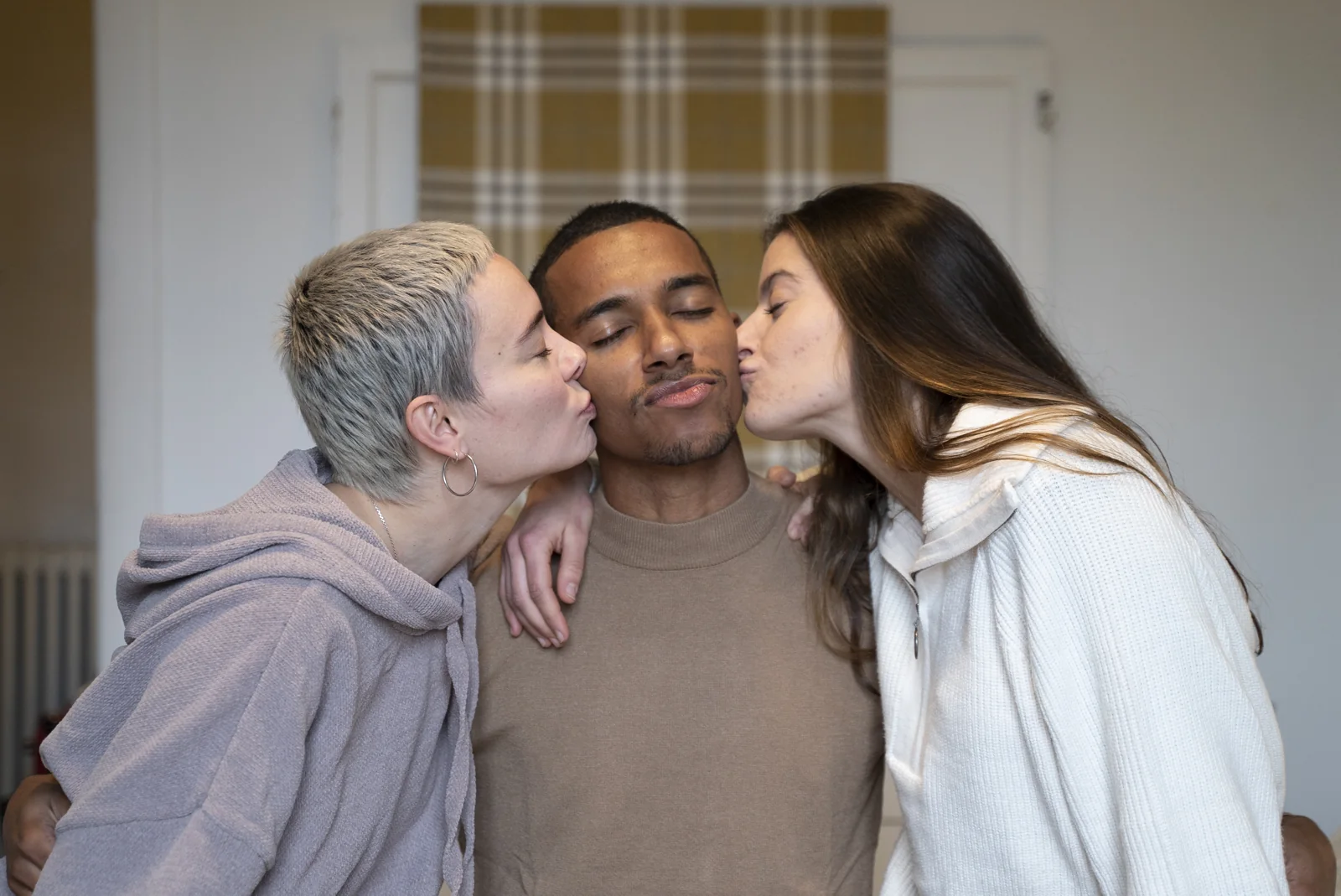
At a dinner, someone calls you straight because you arrived with a different-gender partner. In another room, someone calls you gay because they know your same-gender relationship. Neither description may be the word you use for yourself. Keeping bisexual identity visible in relationships often means handling those everyday assumptions without making your partner, your past, or your private life into public evidence.
Visibility can be quiet or public. You might want your partner to remember your identity, a friend to stop relabeling you, or a social introduction that does not erase you. The first step is to decide what recognition would actually look like in your relationship, rather than accepting other people's guesses as the only description available.
Bisexual Identity in Relationships Does Not Follow a Partner's Gender
Your current partner does not define your orientation for you. GLAAD's bisexual guidance describes a capacity for attraction to more than one gender. That identity can remain meaningful in a different-gender relationship, a same-gender relationship, or a relationship with a nonbinary person. The visible shape of a couple is not a substitute for someone's own words.
This distinction can be easy to understand in theory and harder to maintain socially. People may use a quick label for a pair because they want to categorize the relationship, not because they have listened to each individual. You can correct the description without criticizing the relationship itself: "I'm bisexual; being with my partner does not change that."
Finding a compatible connection through bisexual dating is one stage of sharing your identity. Once a relationship develops, the question changes: how can this partnership include what you know about yourself, even when observers make different assumptions? You do not have to add a new relationship or reveal your history to answer that question.
Ask Your Partner for the Recognition You Actually Want
Tell your partner what would help instead of asking them to infer how visible you want to be. Perhaps you want them to stop describing you as straight, acknowledge a bisexual community event, or understand why a careless joke bothered you. A concrete request gives them something they can change.
Try: "When you say I used to be bi, it sounds as if our relationship erased part of me. Please describe me as bisexual if the topic comes up and I have agreed it is okay to share." This includes both recognition and privacy. Your partner does not need permission to respect your identity privately, but public disclosure may need an agreement.
Ask what they understood from the conversation. They may have mistaken identity visibility for dissatisfaction or a proposal to change the relationship. You can clarify: "I am talking about how you know me, not asking for a different commitment." If the commitment itself also needs discussion, treat it separately. Combining the issues can make an uncomplicated request for acknowledgment sound more confusing than it is.
Correct an Introduction Without Offering a Personal Archive
A brief correction can be enough when someone uses the wrong label. You do not need to recount former partners, explain attraction percentages, or invite questions about sexual experiences. Decide how much energy the setting deserves and whether correcting the person would expose information you prefer to keep private.
At a friendly gathering, you might say, "Actually, I am bi, and this is my partner." At a dinner where you do not want further discussion, "That is not quite the word I use for myself" can signal the problem without beginning a public conversation. You can also speak privately afterward or let the moment pass and address it with the host later.
Choose a role for your partner in advance. Would you like them to correct a relative, change the subject, or simply check in with you afterward? Support should not become a public announcement made on your behalf. When coming out while dating, consider how recognition in one setting might carry information into another.
Notice the Difference Between Privacy and Erasure
Privacy means choosing who knows something; erasure means someone denies or replaces your identity. They can look similar from the outside, but they feel and function differently within a relationship. A private person may want a partner to acknowledge bisexuality at home while avoiding disclosure at work. That is not the same as a partner insisting bisexuality no longer exists.
Ask yourself whether you control the boundary. "I do not want to discuss my orientation with colleagues" expresses your choice. "You must call yourself straight now that we are married" expresses someone else's demand. The distinction matters even if both lead to little public discussion.
You can also change a privacy preference. A boundary that made sense earlier may feel restrictive later, or a new job or family circumstance may make discretion more important. Agree to revisit the practical choice without questioning whether the identity is real. Review photos, shared devices, and onward disclosure as part of LGBTQ+ dating privacy when the technical side of visibility needs attention.
Keep Community Connection Independent of Romantic Availability
You can value bisexual or LGBTQ+ community while being happily partnered. Reading bi writers, attending an appropriate event, maintaining friendships, or participating in a discussion does not automatically announce that you want another romantic connection. Community and dating can overlap, but they are not interchangeable.
Explain the purpose of an activity if a partner is uncertain. "I want to attend because I like being around people who recognize this part of me" describes a social need. If the event has a dating focus, acknowledge that distinction rather than pretending every space is identical. Discuss what participation means within your existing commitments.
A partner can join some experiences and leave room for others to be yours. You do not need them to share your label to support your friendships or interests. The same respect for different experiences that matters in LGBTQ+ dating also matters in an established partnership. Your community life can add to your sense of self without replacing your relationship.
Let Changes in Language Be a Conversation
If you become more comfortable calling yourself bisexual after a relationship has begun, introduce the word as information about yourself rather than a surprise test for your partner. You might have recognized attraction earlier without having a label that fit, or kept the label private. Explain as much of that development as you want to share.
An example is: "Bisexual is the word that fits me now. I want you to know because it helps me describe something I have felt, not because I have been hiding a second relationship." This separates identity language from behavior. You do not have to invent a single dramatic moment of discovery if the understanding developed gradually.
Give the conversation room to continue without surrendering your self-description. Your partner may need to revise assumptions about you, but they do not get final authority over the label. If their concern is what happens next, answer the relationship question directly. "Our commitment remains the same" is meaningful when it is accurate; a wish to change it deserves a different discussion.
Do Not Turn Recognition Into Proof of Fidelity
Acknowledging bisexuality should not require you to demonstrate that you will never notice anyone else. If a partner repeatedly treats identity visibility as a warning sign, return to actual agreements and conduct. You can offer reassurance about the relationship without accepting a premise that your orientation is evidence against you.
Avoid responding by denying your identity, distancing yourself from all bi friends, or reporting every interaction in an attempt to settle the worry permanently. Those steps may reduce your room to live without answering the underlying question of trust. Ask what particular behavior concerns your partner and whether the same expectation applies to both of you.
In monogamy and bisexual dating, recognizing a partner's identity should not become a reason for surveillance. "I want you to know I am bi" and "I honor our commitment" can sit together. A relationship can make room for both statements without treating one as a threat to the other.
Respond When Recognition Remains One-Sided
If you have explained what you want and a partner continues dismissing your identity, look at the repeated behavior rather than the nicest single response. Does a correction lead to change, or are you having the same conversation indefinitely? Do they respect your public privacy while acknowledging you privately, or use privacy as an excuse never to acknowledge you at all?
You can name the pattern: "We have discussed this several times, and you still describe me as someone I am not. I need that to change." Be specific about what change would look like. You might want different introductions, an end to a recurring joke, or a willingness to listen when the topic matters to you.
Some conversations can improve a relationship; others reveal a limit in what the person is willing to understand. Consider what you can accept without making yourself smaller over time. Recognition does not have to be loud to matter. It needs to be real enough that you can describe yourself accurately and have your partner take your words seriously.